Elements of our adaptation
How director Kyle Morrison has adapted and shifted this classic text.
1. The ensemble. Performers create many of the scenes together as an ensemble, physically and vocally, rather than working as separate individuals.
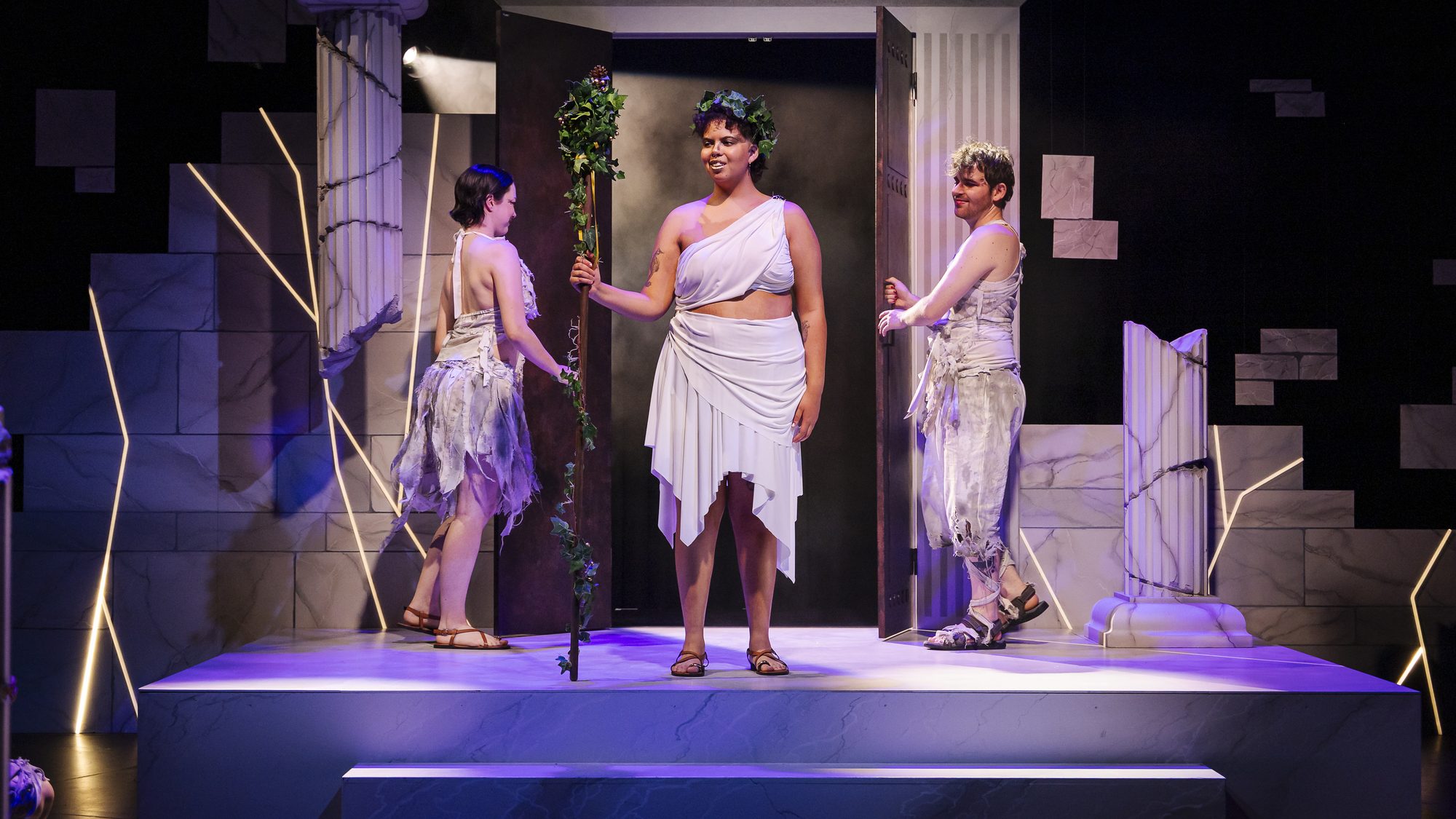
2. Shared roles. Quite often, more than one performer contributes to the same character. Roles that are traditionally played by one performer, such as Dionysus, are played by up to six performers at a time.
3. Text, movement, and sound. This production focuses on movement, music, and sound, and these elements drive the narrative in several moments. This is an interesting relationship between the text and the visual and audio elements of the production.
4. Adaptability. In this version of the play, performers appear to respond to one another in real time. A lot of the performance has been developed through experimentation rather than simply rehearsing fixed decisions; devising and collaboration, rather than director-led work.
Themes and symbols
Rave and party culture in Morrison’s The Bacchae
Photograph: Stephen Heath
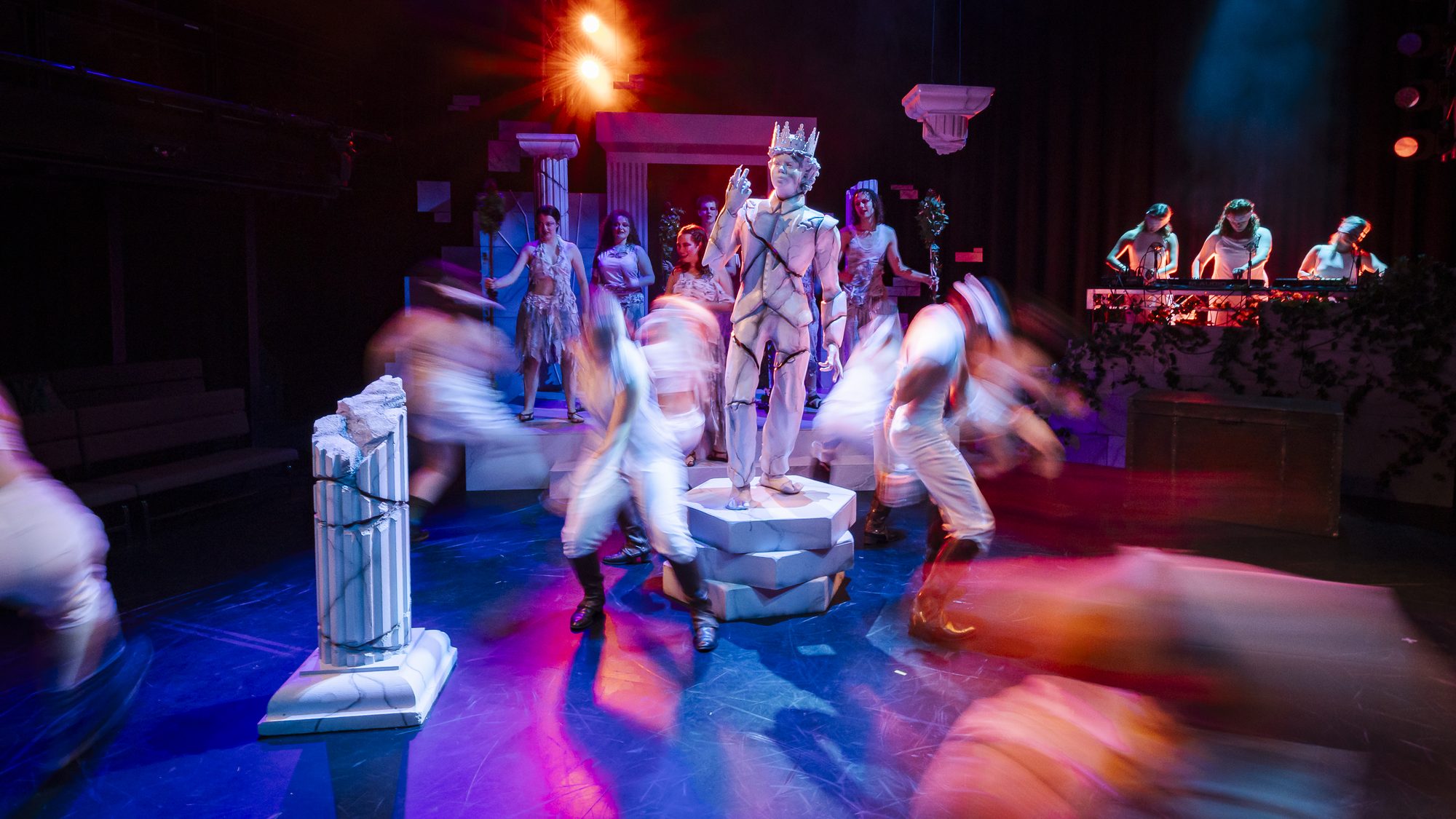
Rave and party culture in Kyle Morrison’s adaptation of The Bacchae explores the idea of time-transcending third spaces, substance use, and the repercussions of these activities on family, responsibility, and community.
A central dramaturgical question of this production is: what happens to the children and community when the parents get taken away? And more so, what shifts when they are away under the influence?
Kyle delves into the idea of Dionysus’ ‘spell’ being manifested by the concept of party and rave culture, parasitically infecting the parents and older populations of Thebes, the Maenads. This is exemplified in Scene Four, wherein the messengers relay what they saw at Mt Cithaeron, which parallels directly with the image of a bush doof and hallucinogenic illusion.
Production examples
- Sound design: electronic bass, blood rave, hyper-pop, grunge, and Detroit and peak-time techno. This production heavily utilises sound, similar to that of a rave, to form atmosphere and aid emotional arc and storytelling.
- Costume design: the costumes replicate modern rave attire, which has returned to minimalistic, flowing, asymmetrical dress. It often includes some kind of headwear or scarf, and sandals or combat-type boots.
- Agave’s journey: Agave’s realisation that her actions are a product of her psychosis and being under the influence. Understanding our central dramaturgical question adds a new spin and perspective to the actions and consequences Agave has to face.
Gods, mortals, and boodja
In this production of The Bacchae, Kyle explores, pulls apart, and adds a new perspective on the separation between gods and mortals, asking the morally ambiguous question:
“Who should we listen to?”
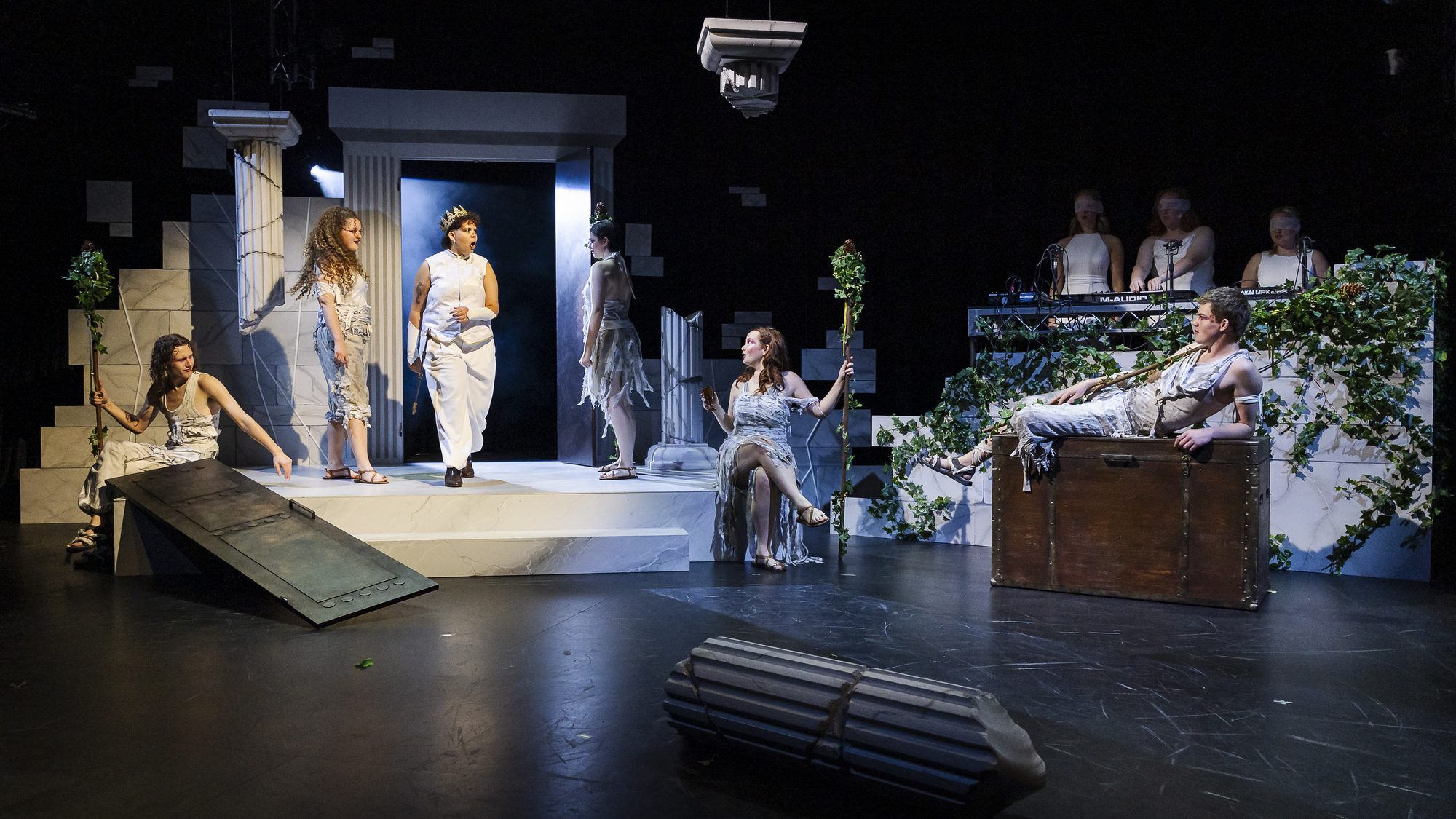
Kyle’s retelling of The Bacchae strays from the original tale with the addition of new characters called The Fates: three spirits connected to Mother Boodja and the history of the land. They are three interweaving godlike souls that control the happenings, specifically sound and sometimes the movement of characters, on stage.
Throughout the play, The Fates speak sonnets by William Shakespeare, bringing another form of classic text into the mix. They are connected to the traditional wise seer in the play, Tiresias, but are not mortal. Kyle uses The Fates to represent Country, and their manipulation of sound and movement from a sound desk is a symbol of their inherent care and control of the land and its people. Essentially they sit above the Greek gods, and are all-seeing, all-knowing.
Order, irrationality, and decay
Photograph: Stephen Heath
Kyle Morrison establishes a certain status for each character, then allows the audience to observe each position crumble as the society does around them. As characters fall, so does their physicality on stage shift, and pieces of the set become scattered ruins, much like the many civilisations that have come before us.
Morrison uses the motif of collective movement to represent these different structures and their disintegration. For example, the soldiers are a group that control and protect, thus represented with stiff and powerful physicality. Whereas the Maenads (chorus of worshippers) are a flowing rough ensemble driven by impulse and pleasure, finding indirect softness and often erratic movement. Movement is a tool for symbol and motif.
Disguise and deception
Photograph: Stephen Heath
Morrison has several actors playing one role at a time; this works as a motif of deception for the character of Dionysus. Not a feature of the original text, Morrison’s choice amplifies Dionysus’ duality, ability to disguise himself, and his fascination with psychologically manipulating mortals.